The easiest thing to publish is also the most powerful
Short-form publishing built for attorneys who never have time to write the long version.
The blank page is the problem
You already know you should be publishing. A steady presence on your own site is how clients find you, how you show your expertise, and how search engines (and now AI assistants) decide whether you're worth citing.
But every time you sit down to write, it turns into a project. An outline. A draft. An edit. A photo to find. So it waits. And waits. Months pass, and the most recent thing on your site is still dated last spring.
That's not a discipline problem. It's a format problem.
Most websites only give you two tools
Posts and pages. Both are heavy. Both expect a thousand words and a thesis. Neither is built for the thought you actually have at 7am with a coffee in your hand, reading something that's just plain wrong about your practice area.
So that thought goes to LinkedIn, or nowhere, and your own site stays frozen.
Notes are the format the legal web has been missing
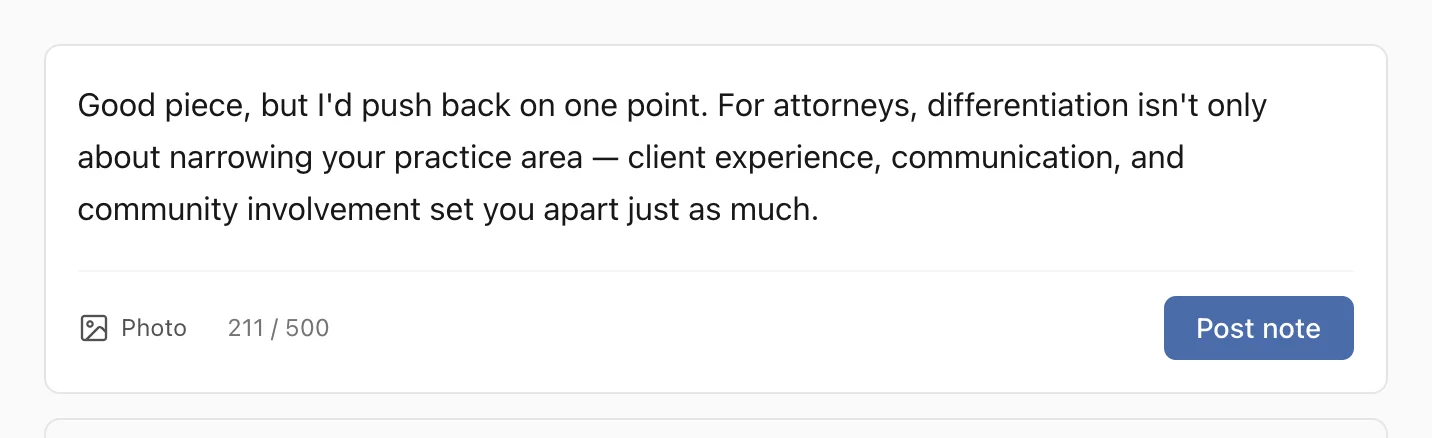
A Note is a short post. A quick take. An observation from a case. A link with your two cents on it. No outline, no production. You write a few sentences and publish.
Why a few sentences punches above its weight
Regularity beats length. Showing up every week matters more than showing up brilliantly once a quarter. Notes are light enough to actually keep up with, and consistency is what builds an audience and authority over time.
AI reads them. When you add your expert take to a link or a ruling, you're creating exactly the kind of clear, sourced commentary that AI assistants digest and cite. Attorneys keep asking how to show up in ChatGPT and Google's AI answers. This is how: short, specific, expert, and published under your own name on your own domain.
They build relationships across the legal web. When you share and comment, and other attorneys repost, reply, and mention you back, you create real connections between legal sites.
What it looks like in practice
You're reading an article that touches your practice area. Something in it is wrong, or it's exactly the situation your clients deal with every week.
On your desktop you click the publish.law bookmarklet; on Android you tap Share. The composer opens with the link already in place, and if you highlighted a passage first, your quote comes along too. You add a sentence of your own perspective and hit Post note. (An iPhone app that shares straight to your Notes from the iOS share sheet is in the works.)
That Note now lives on your website, under your name. If you've connected LinkedIn and ticked Share to LinkedIn, it posts there at the same moment. An article you didn't even write just became a piece of published expertise, with your insight on top, in about fifteen seconds.
Notes are also how you connect
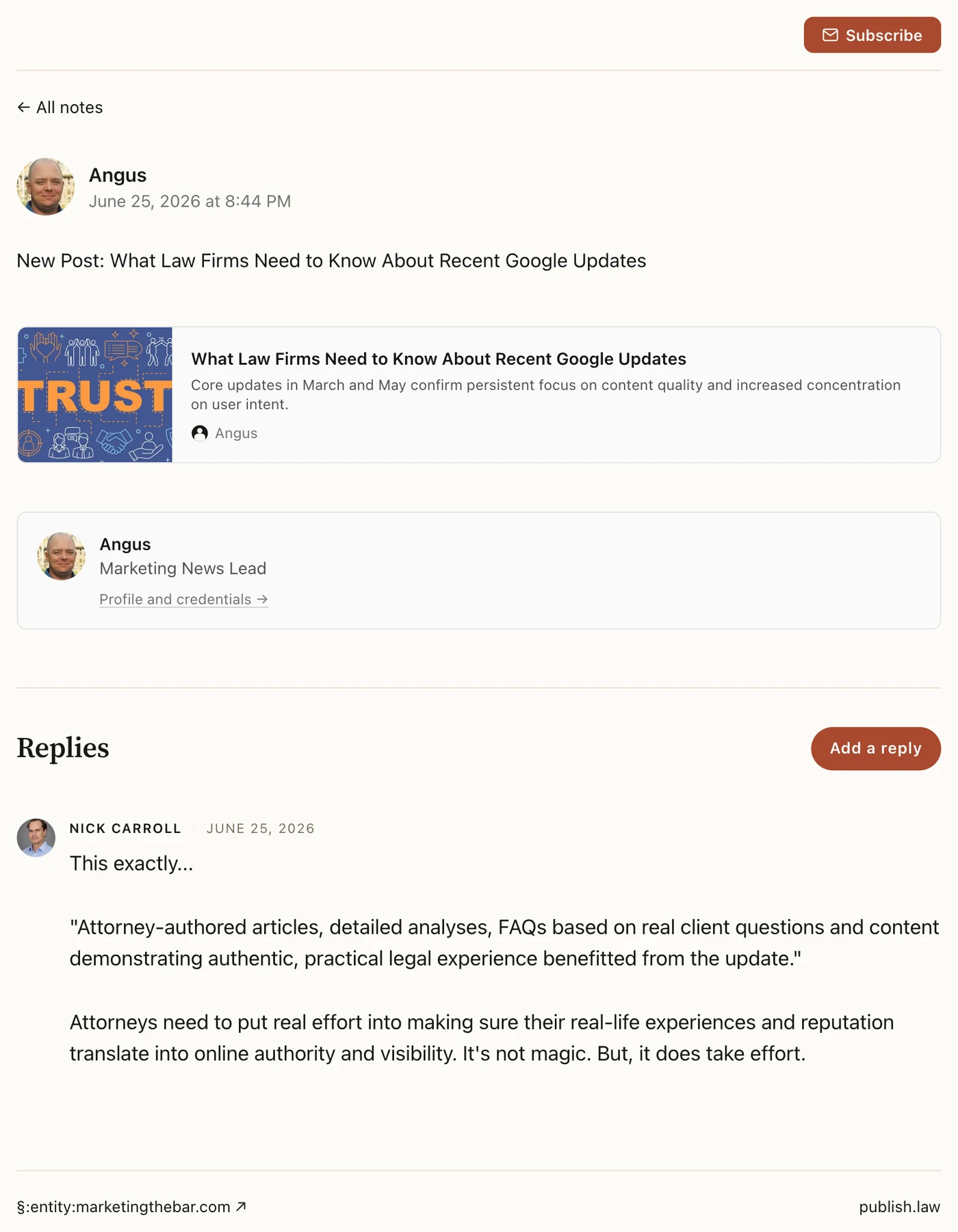
Reposts, replies, and mentions are Notes too. Amplify another attorney's point, weigh in on a colleague's take, or tag someone into the conversation. Every one of those is a short, easy act of publishing, and every one builds a relationship.
Try it
Notes are live on publish.law right now, on every plan, free included. If you've been meaning to publish and never find the time, this is your on-ramp. Start your site free, write your first Note in the next five minutes, and find out how good it feels to finally have something to say and somewhere that's yours to say it.