
Every lawyer I know wants the same thing: to be known for the work that actually matters. Not vanity. Not “personal branding.” Just credibility that shows up where people are looking.
The problem is, the internet doesn’t reward credibility. It rewards noise. You can win a verdict on Friday and still lose the conversation — in search, in the press, or in the AI engines already writing the story.
That’s why we built Attorney Hub — the first hosting package on publish.law, powered by Ghost and tailored for the legal profession.
I’m not here to romanticize “thought leadership.” You’re busy. You want reputation that turns into work. Fair.
Attorney Hub exists for that exact reason: you need a place online that you own, that captures the attention you earn anywhere else, and turns it into relationships you control — subscribers, reporters, referrals, and yes, clients.
Ghost is the engine. Publish.law provides the legal-specific setup and support. The result is a clean, fast, professional hub under your name that does three jobs on day one:
- Be the destination. Everything you do online points back to your hub.
- Capture the relationship. Turn visitors into subscribers you can actually reach.
- Build the record. Your work compounds into a credible archive over time.
No fluff. No funnels. Just the foundation that makes your online reputation real — and useful.
Why your own hub (in plain English)
- Leads come from relationships. Relationships come from contact. Contact comes from a list you control. Your hub is where people subscribe and where you write when you actually have something to say.
- Social is rented. Feeds scroll past you. Your hub doesn’t. Everything traces back to your domain, under your name.
- Firm sites blur authorship. Great for the firm, forgettable for you. Your hub keeps the byline and the upside.
- Compounding beats bursts. One strong post helps today. An organized archive wins next month—and keeps winning.
What you get (day one)
- Ghost-powered site on your domain — fast editor, clean design, no plugin swamp.
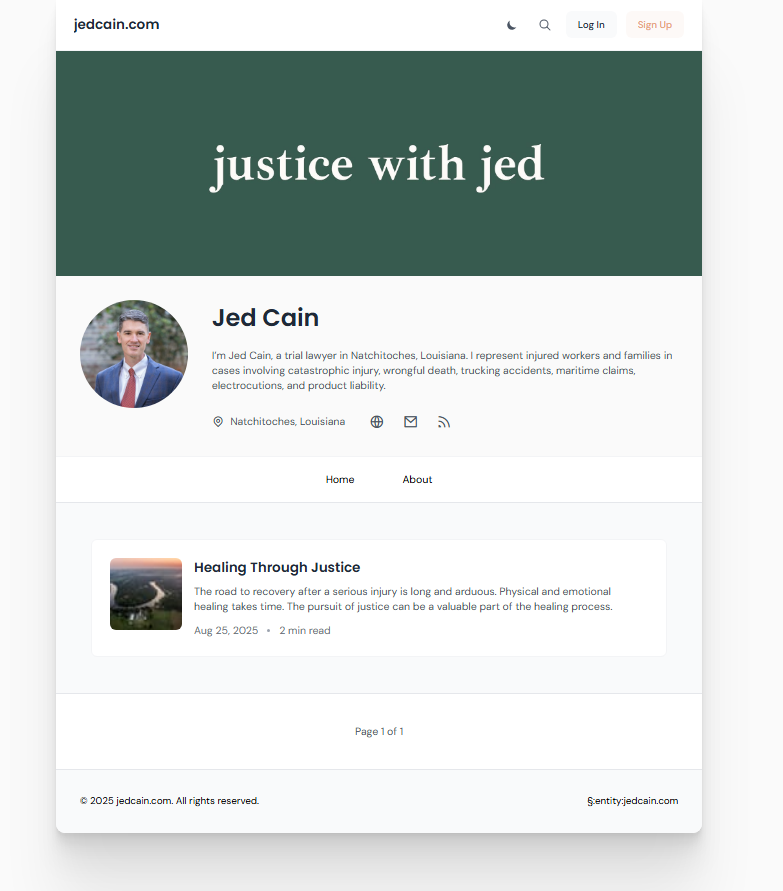
- Attorney Hub layout — profile + archive built for credibility and easy reading.
- Newsletter + subscribers — forms, delivery, basic analytics included.
- Lightweight CRM — keep contacts and notes where you control access.
- Sane structure for discovery — authorship, schema, and identity baked in so search/AI can tell it’s you.
- Optional OLPN distribution — when it helps, syndicate to connected outlets (e.g., The Legal Examiner) without losing your byline or control.
- Ownership guarantees — your content exports, your list, your domain. Period.
- Legal-aware support — no “enterprise” runaround.
How to actually use it (minimum viable motion)
- Plant the flag. Launch the hub. Add a clear bio, practice focus, contact, and subscribe.
- Point everything back. Pin your hub in social bios, email signatures, CLE slides, podcasts, and media quotes.
- Start a real list. Add colleagues, referral partners, reporters—with permission. Invite them to add you back.
- Publish with intent. Not “content.” Two kinds of posts win:
- Explainers clients forward (“What the new statute really changes for victims”).
- Signals peers notice (case notes, amicus, community work).
- Follow up. When something happens—a verdict, a media hit, a talk—post it, then email the list. That’s it.
Do that consistently—even monthly—and your hub starts compounding. Ignore it for a stretch and it still works as a credible, owned destination that converts passersby to subscribers.
What changes when you do this
- People follow you, not just your firm.
- Reporters and organizers have somewhere authoritative to link.
- Search and AI systems see a coherent author with a body of work.
- Your list grows—and becomes a direct channel you don’t have to rent.
Not a marketing funnel. A base of operations.
If you want ads, buy ads. If you want a durable reputation that produces referrals and opportunities, build a base. Attorney Hub is that base—authorship infrastructure that turns visibility into relationships and relationships into work.
Own the record. Keep the relationship. Let the work compound.
Get the Attorney Hub on Publish.law →